When the commercial AV industry wants to understand where the next wave is coming from, it looks to InfoComm. And when AVIXA announces who will take the keynote stage at InfoComm 2026, the choice says a lot about where the entire industry is heading. This year, that signal couldn’t be louder: Microsoft Corporate Vice President Ilya Bukshteyn will deliver the keynote address on Wednesday, June 17, at the Las Vegas Convention Center — and his topic cuts to the heart of every boardroom, conference room, and collaborative workspace in the commercial AV world.
The announcement, confirmed by AVIXA in mid-March, marks one of the most significant keynote bookings InfoComm has made in years. Bukshteyn oversees Microsoft’s portfolio of Teams Phone, Teams Rooms, Teams Events, and Teams Premium — solutions that have quietly become the backbone of how millions of organizations communicate, meet, and collaborate across hybrid physical and digital spaces. His InfoComm keynote will focus on the future of AI-powered communication and collaboration and how intelligent systems are reshaping the workplace experience from the ground up.
Why This Keynote Matters to the AV Industry
For commercial AV integrators, consultants, and technology managers, this announcement is more than a marquee booking — it’s a directional statement. The collaboration technology stack and the AV integration world have been converging for years, but AI is accelerating that convergence at a pace that is forcing every stakeholder to rethink how they design, sell, and support AV systems.
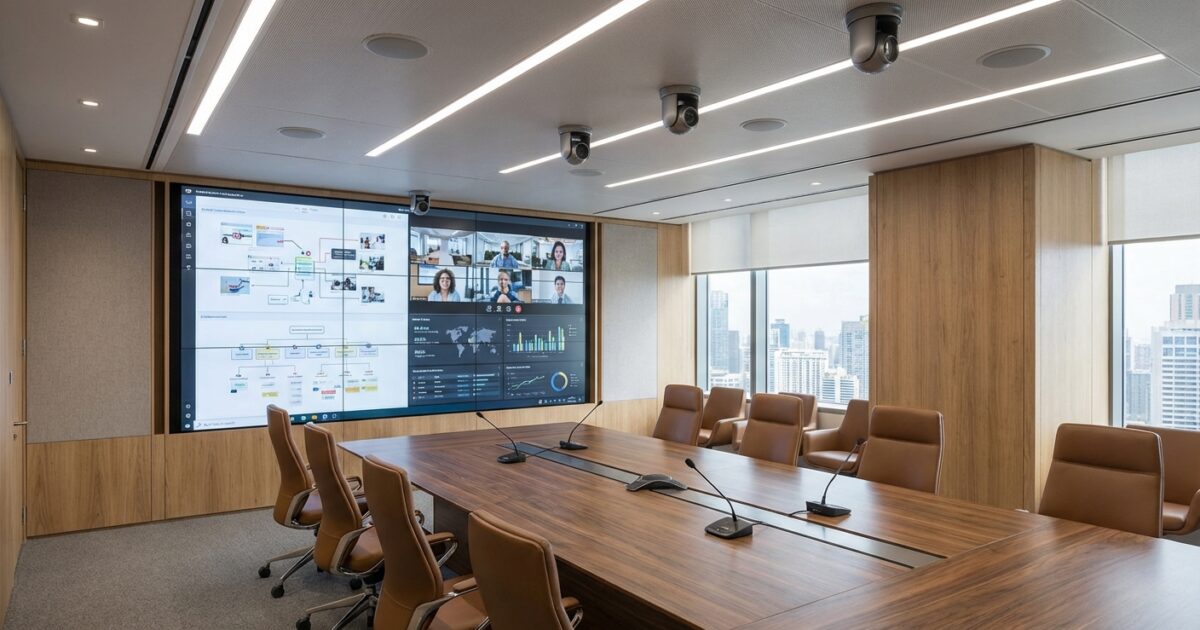
Microsoft Teams already lives inside most corporate conference rooms. From touchscreen displays and room booking panels to ceiling-array microphones and intelligent camera systems, the hardware that AV integrators specify and install is increasingly designed around the software platforms that employees use every day. When the corporate VP overseeing all of that software takes the InfoComm stage, he’s not speaking to a room full of software developers — he’s speaking to the people who wire the rooms, commission the systems, and maintain the infrastructure that his platform depends on.
“AI is creating a new era of intelligent workplaces for organizations of all kinds,” Bukshteyn has said. “The next evolution of AI is here: agentic co-workers designed to help people multiply their impact. At InfoComm, I’m excited to share how AI-powered experiences in Microsoft Teams add new value to physical workspaces and elevate the way people connect and communicate every day.”
That phrase — agentic co-workers — deserves attention. It signals a shift from AI as a background assistant to AI as an active participant in meetings and collaborative workflows. For AV integrators, this raises practical questions: What does a room designed for AI-assisted meetings look like? What kind of audio capture, video framing, and display technology does an agentic AI actually need to do its job well?
InfoComm 2026: A Show Designed for This Moment
InfoComm 2026 runs June 13–19 at the Las Vegas Convention Center, with the exhibit floor open June 17–19. This year’s show is being positioned as a significant evolution of the format, not just another iteration. AVIXA has redesigned the show floor experience around a “Work/Play” concept that groups technology into immersive activation hubs rather than traditional booth rows — a format designed to put solutions in context rather than in isolation.
“InfoComm is where the industry comes together to see what’s next, and how integrated systems perform in real environments,” said Jenn Heinold, Senior Vice President of Expositions for the Americas at AVIXA. “As AI continues to reshape how we work and connect, we’re excited to welcome Ilya to InfoComm 2026 to share insights from the forefront of collaboration innovation.”
Beyond Bukshteyn’s keynote, the show will feature expanded learning opportunities across conferencing and collaboration, enterprise IT, broadcast workflows, and live events — with a growing focus on how AI is being applied across AV systems and production workflows. For integrators who have been tracking AI’s impact on their business from a distance, InfoComm 2026 is shaping up to be the event where that conversation becomes unavoidable.
If you’re planning your attendance or working through a full AV system design process ahead of a major refresh, this is the year to make InfoComm a priority on your calendar.
The AI-in-AV Shift: What Integrators Are Facing
Bukshteyn’s keynote theme reflects a broader transformation that commercial AV integrators and consultants are already navigating on the ground. Over the past 18 months, AI features have moved from optional add-ons to central selling points in almost every category of professional AV equipment.
Camera systems now ship with built-in AI framing and speaker tracking. Microphones use machine learning to separate voice from ambient noise in ways that would have required expensive DSP units just a few years ago. Digital signage platforms are beginning to incorporate generative content and audience analytics. And room scheduling systems are integrating with AI assistants that can book, reconfigure, or suggest alternative rooms based on meeting patterns.
For the AV professional, this creates both opportunity and complexity. On one hand, AI-enhanced products deliver objectively better performance — meetings sound better, participants are framed more consistently, and rooms are easier to manage. On the other hand, integrators are now expected to support software platforms, firmware update cycles, and cloud-connected systems that didn’t exist in their original scope of work.
Microsoft Teams Rooms, in particular, has become the dominant platform in enterprise conferencing deployments. Understanding how to specify, install, and support Teams-certified hardware isn’t optional for integrators who serve corporate clients — it’s table stakes. And as Bukshteyn has signaled, the platform is about to become significantly more capable and significantly more AI-dependent.
What “Agentic AI” Means for Physical Spaces
The concept of agentic AI — AI systems that can take actions, not just provide information — has implications that reach beyond software. When an AI participant in a meeting can summarize discussions, assign action items, look up relevant documents, and follow up with attendees automatically, the meeting room itself becomes a more consequential space. The technology that captures audio, renders video, and displays content is no longer just infrastructure — it’s the interface between human participants and an AI that is actively contributing to the work.
This puts a premium on audio capture quality. Agentic AI systems are only as good as the audio they receive. A ceiling microphone array that misses a word, a speaker that introduces echo, or a conferencing codec that compresses audio too aggressively can all degrade the AI’s ability to participate effectively. Integrators who understand this will be better positioned to make the case for premium audio hardware — not as a luxury, but as a functional requirement for AI-assisted collaboration.
Similarly, AI-powered camera framing, while impressive, depends on reliable network connectivity, sufficient processing headroom in the room controller, and consistent lighting conditions. The physical design of the meeting space — from ceiling height to lighting layout to display and signal routing infrastructure — directly affects how well AI systems perform in that room.
Bukshteyn’s Background: Why He’s the Right Voice
Ilya Bukshteyn has been one of the key architects of Microsoft’s transformation from a software company into a collaboration platform company. His portfolio covers the full spectrum of how Teams is used across organizations: Teams Phone for telephony replacement, Teams Rooms for dedicated meeting spaces, Teams Events for large-scale virtual and hybrid gatherings, and Teams Premium for the AI-enhanced tier that includes Intelligent Recap, AI Notes, and advanced meeting management features.
His presence at InfoComm signals something important: Microsoft sees the commercial AV channel as a critical partner in its AI collaboration strategy. The hardware that integrators specify and install is the delivery mechanism for everything Microsoft is building. A premium AI meeting experience requires premium hardware to run on. That alignment of interests — between a software giant and the AV industry — is worth paying attention to.
Preparing Your Business for the AI Collaboration Era
Whether you’re an integrator, a technology manager, or a consultant working with corporate clients, the message from this InfoComm 2026 announcement is clear: AI-powered collaboration is not a future trend. It’s happening now, and the physical AV infrastructure supporting it needs to be purpose-built for that reality.
That means revisiting room designs with AI performance in mind. It means understanding which hardware is certified or optimized for Microsoft Teams Rooms AI features. It means staying current on firmware and software updates that enable new AI capabilities. And it means having conversations with clients about budgeting for AV systems that will need to evolve alongside the software platforms they’re built around.
InfoComm 2026 — and Bukshteyn’s keynote specifically — will offer the industry a rare opportunity to hear directly from the team shaping the software that drives so much of the commercial AV market. The show runs June 13–19 in Las Vegas. Registration is open now through AVIXA at avixa.org.
For the AV industry, this isn’t just a tradeshow keynote. It’s a signal about the direction of the entire market — and the clearest indication yet that the future of commercial AV runs through AI-powered collaboration. Don’t miss it.
Sources: Commercial Integrator, rAVe Publications, AVNation
