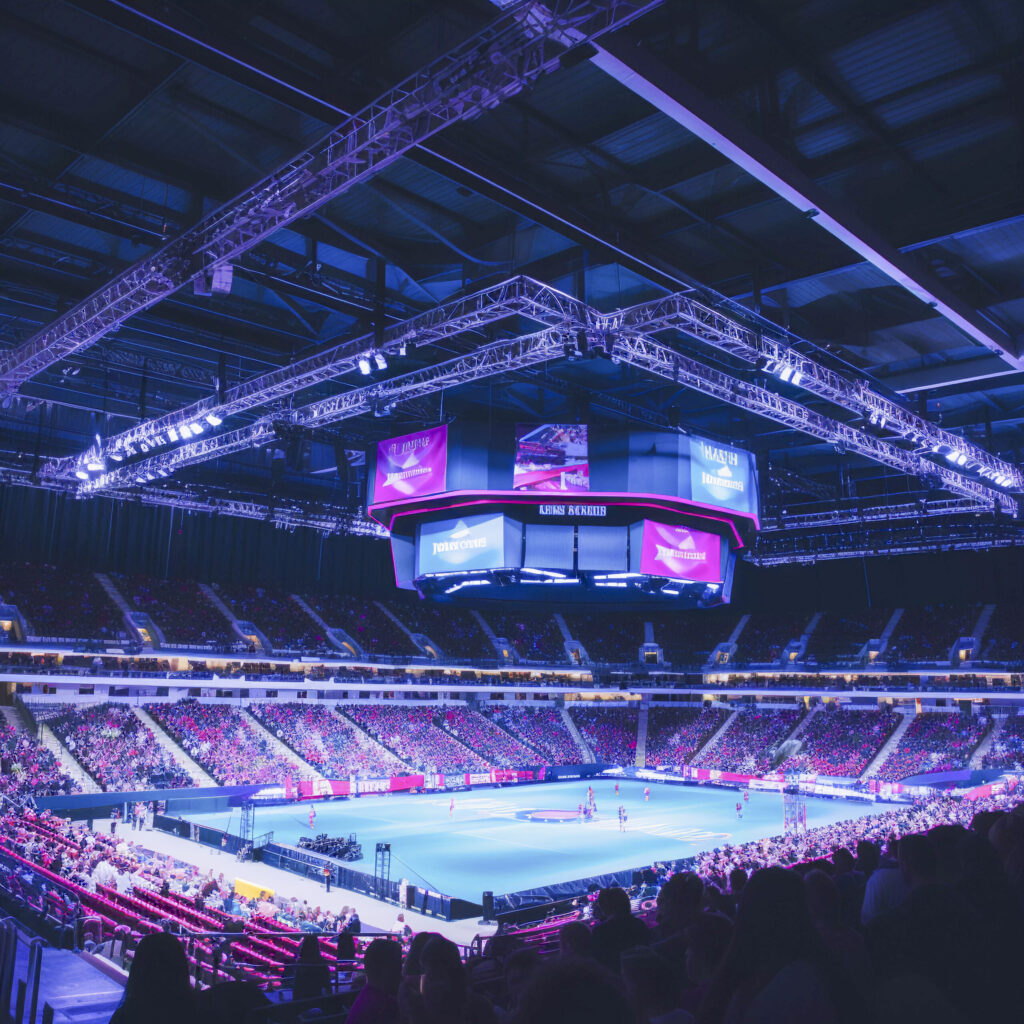

Designing Intelligible, Impactful Audio for Arenas
Stadium sound system design for arenas: intelligible STI/SPL coverage, outdoor stadium weatherization, commercial audio equipment, commissioning, and code compliance.
What “Great” Stadium Sound Means Today: Intelligible, Impactful, Compliant
Modern fans don’t judge a stadium sound system by how loud it gets – they judge it by how clearly they can understand every word and how powerfully they can feel every moment. At The Audiovisual Consultant, we design commercial audio systems that put intelligibility, impact, and compliance at the center, ensuring your venue sounds phenomenal on game day and meets the standards that keep people safe.
Why intelligibility matters more than loudness
Intelligibility is the listener’s ability to understand speech – clearly and consistently – across the venue. In stadiums and arenas, this includes:
- Routine play-by-play and public address announcements
- Safety and evacuation instructions that must be heard and understood
- Hype moments, sponsor reads, and player intros where clarity drives emotion
Poor intelligibility turns sound into noise. When crowd roar and reflections mask critical midrange frequencies, messages become garbled and trust erodes. By prioritizing direct sound over reverberant energy, controlling reflections, and managing coverage and time alignment, venues deliver announcements fans can understand the first time – no repeats, no confusion. The result is a better fan experience and a safer facility.
Intelligibility isn’t “nice to have” – it’s the baseline for a professional venue. Many authorities having jurisdiction evaluate speech transmission quality (often with STI or similar metrics), and your paging system must be designed to meet those targets, even under high crowd noise.
The three pillars of stadium audio success
- Coverage uniformity
Uniform coverage means even sound pressure level (SPL) and tonal balance across seats and the field of play. When coverage is uneven, guests in hot spots are overwhelmed while others strain to hear. Great sound system design uses modeling, precise aim angles, and appropriate loudspeaker directivity to:
- Maintain a tight SPL tolerance across sections
- Avoid exciting reflective surfaces (concrete, steel, glass)
- Combine main clusters, delay rings, and fills into coherent zones
- Keep energy in the bowl and off the neighborhood
- Appropriate SPL and headroom
Impact without distortion requires both adequate output and clean headroom above the loudest expected ambient noise. Music moments need punch and bandwidth; speech needs controlled midrange and stable tonality. Smart systems:
- Provide ample headroom above peak crowd levels to maintain clarity
- Use time-aligned arrays and fills to reduce comb filtering
- Apply dynamic EQ/ducking strategies to protect speech intelligibility
- Balance sub-bass excitement with vocal articulation
“On September 29, 2014, Arrowhead Stadium set a Guinness World Record for loudest crowd roar at 142.2 dB(A) during an NFL game – underscoring why robust headroom and controlled coverage are essential in stadium sound system design.” – Source
- Compliance and reliability
Sports venues are mission-critical environments. Your system must meet applicable codes and performance requirements while withstanding weather, vibration, and constant use. Best practices include:
- Weatherization for outdoor stadium sound system components (IP ratings, UV-resistant enclosures, stainless hardware, hydrophobic grills)
- Redundant amplification and network paths for continuity
- System health monitoring, fault reporting, and logging
- Clear priority and paging logic for emergency messages
- Proper power and grounding, surge protection, and thermal management
Together, these pillars create a venue that delivers thrilling music, intelligible announcements, and reliable operation every day of the season.
Stadium sound system vs. arena sound system nuances
Open-air vs. enclosed venues
- Open-air stadiums battle wind, temperature gradients, and humidity shifts that bend sound and change perceived tonality. Directional loudspeakers, higher SPL capability, and zone-based EQ strategies help keep coverage consistent. Weatherized commercial audio equipment is mandatory.
- Enclosed arenas introduce longer reverberation tails and strong reflections from concrete, steel, and glass. Here, controlling early reflections, using tighter directivity, and leveraging delay fills and under-balcony systems are key to clarity.
Crowd noise and reflections
- Stadiums: Crowd noise can spike unpredictably. Systems need significant headroom and long-throw options to maintain intelligibility across the bowl without overshooting into neighborhoods.
- Arenas: Reflections dominate. Careful aim, absorption in strategic areas, and consistent time alignment reduce smearing and improve speech transmission.
Zoning strategies that work
- Bowls and stands: Main clusters plus delay rings and vomitory fills for even SPL and timing; steer energy to seats, not concourses or structures.
- Concourses and restrooms: Separate zones with lower SPL, focused speech/paging, and time offsets to avoid echo from the bowl.
- Suites and clubs: Independent zones with premium music fidelity and paging ducking – often on dedicated DSP scenes and control pages.
- Field-of-play: Dedicated coverage for staff, officials, and presentation positions, with selective muting and I/O for broadcast and events.
These nuances mean the right sound system design for an indoor arena is not a drop-in blueprint for an outdoor stadium – and vice versa. System architecture must reflect the acoustic reality of the space.
SEO essentials to align with your goals
If you’re researching a new stadium sound system or planning an upgrade to an outdoor stadium sound system, focus on:
- Selecting durable, weatherized commercial audio equipment with proven directivity control
- Sound system design that models coverage, SPL, and intelligibility before you build
- A networked commercial audio backbone with monitoring for reliability and compliance
When you’re ready to transform your venue’s audio, The Audiovisual Consultant can help you design, model, and deploy a system that’s intelligible, impactful, and compliant – game after game.
Intelligibility over Loudness: STI, SPL, and Coverage Essentials
Key metrics that predict success
- Speech Transmission Index (STI) targets
For life-safety and critical announcements, aim for STI in the “Good” range; for entertainment and hype content, mid “Fair” to “Good” is often acceptable when combined with strong SPL and bandwidth. STIPA provides fast, PA‑appropriate measurements in real venues and is the practical choice for ongoing verification. - SPL targets relative to ambient
For voice, design for program levels about +10 to +15 dB above typical ambient noise at the listener. For music, provide higher peaks and broader bandwidth but avoid masking speech-critical ranges (1–4 kHz). - Direct-to-reverberant ratio
Favor direct sound at the listener over reverberant energy. Tight directivity, correct aim, and minimizing hard-surface excitation improve clarity more than brute force volume.
“IEC 60268-16 defines the Speech Transmission Index (STI) and its quality categories (from ‘Poor’ to ‘Excellent’), a core metric for evaluating intelligibility in large-venue PA systems.” – Source
Practical targets for real venues
- Typical ambient levels
- During active play: crowd noise in the bowl can hover around 80–95 dB(A), with spikes much higher in marquee moments.
- During breaks/halftime: levels often drop 5–15 dB(A), giving headroom for clear announcements.
- Designing for +10 to +15 dB above ambient for voice
Ensure the PA maintains intelligible vocal levels even when the crowd surges. This generally means substantial system headroom, especially in open-air stadiums where wind and temperature gradients can erode level and clarity. - Managing dynamic range for music
Use appropriate limiters and scene-based DSP to keep music exciting without masking voice. Employ sidechain ducking on announcer mics and ensure sub-bass management doesn’t overpower critical vocal bands.
Coverage uniformity across every seat
- Even SPL beats peak SPL
A system that delivers consistent 3–6 dB tolerance across seating achieves better intelligibility than one with extreme hotspots. Uniformity prevents overexposure in some zones and inaudibility in others. - Avoiding hot spots and dead zones
- Use loudspeakers with controlled directivity and aim to the audience, not reflective structures.
- Deploy delay rings and fills to maintain level and timing under balconies, upper decks, and shadowed areas.
- Time-align arrays/fills to the dominant source to reduce comb filtering and phase smear.
Fast glossary for stakeholders
- STI: Speech Transmission Index (0.00–1.00), predicts intelligibility; STIPA is a quick method for PA systems.
- ALcons: Articulation Loss of Consonants (%); alternate speech clarity metric.
- RT60: Time for reverberant sound to decay 60 dB; longer RT often reduces intelligibility.
- dB(A) vs dB(C): A‑weighting approximates human hearing sensitivity; C‑weighting captures more low-frequency energy.
- Crest factor: Difference between peak and RMS level; important for clean music impact and amp sizing.
- Headroom: Margin between typical operating level and system limits; critical for clarity during crowd surges.
Choosing the Right Stadium Sound System Topology
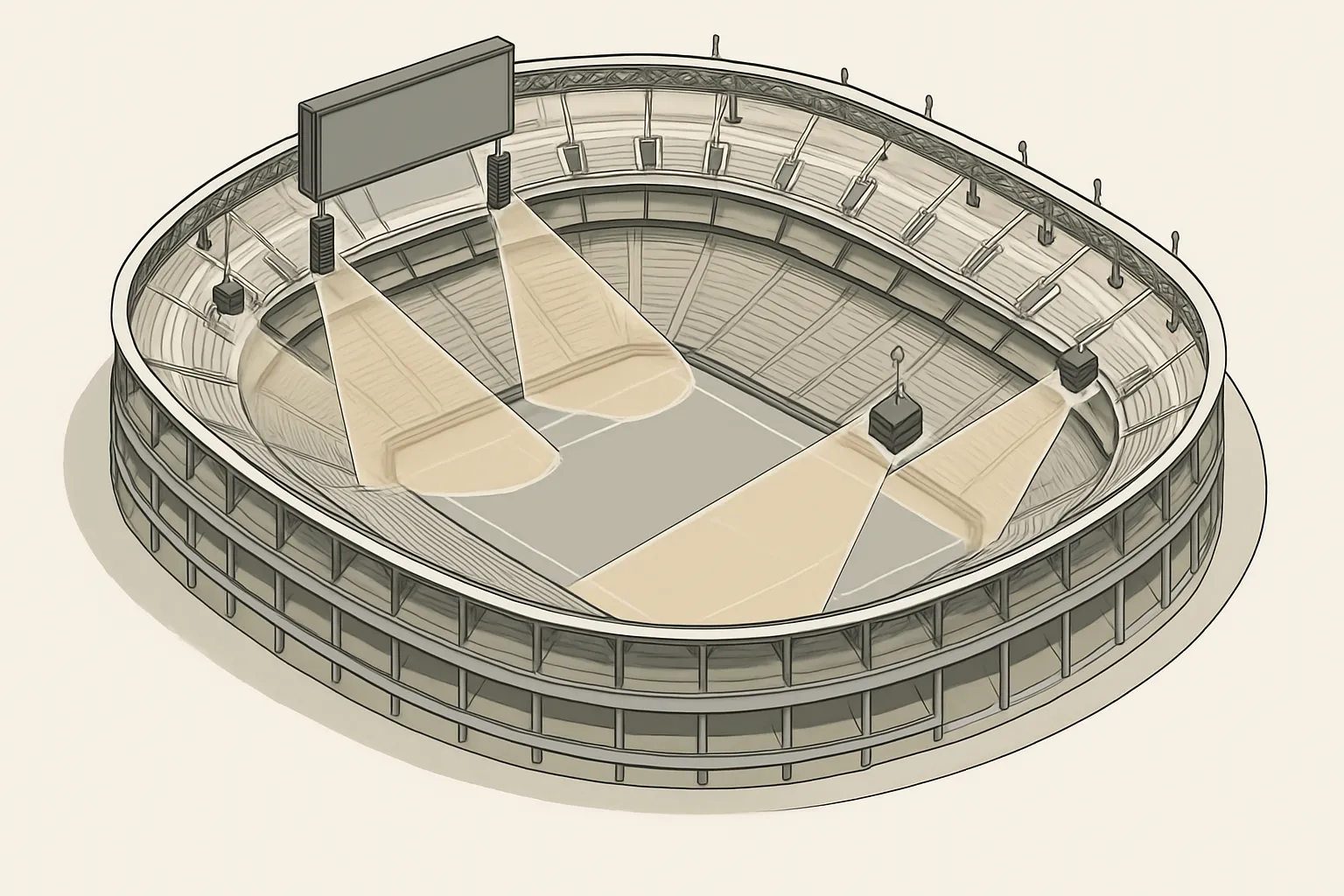
Line array vs. point‑source vs. distributed systems
Selecting the right topology for a stadium sound system starts with venue geometry, throw distance, and audience expectations. Each approach offers distinct strengths and tradeoffs:
- Line arrays
- Strengths: Excellent long‑throw capability, consistent SPL over distance, strong vertical pattern control that reduces reflections; scalable for large bowls and concert‑capable events.
- Tradeoffs: Requires precise rigging and angles, potential visual impact if hung low, cost increases with coverage area.
- Best use: End‑zone or scoreboard hangs for large outdoor stadiums and concert‑ready arenas.
- Large-format point‑source clusters
- Strengths: High output per enclosure, precise horn directivity, fewer hang points, often lower rigging complexity than long arrays.
- Tradeoffs: Shorter effective throw vs. long line arrays; needs careful aiming to avoid hot spots.
- Best use: Arenas or mid‑sized stadiums where coverage zones are moderate and sightlines demand compact clusters.
- Distributed systems (per‑section fills)
- Strengths: Exceptional coverage uniformity and speech clarity at lower SPLs; minimal spill and better direct‑to‑reverb ratio; redundant by nature.
- Tradeoffs: More loudspeakers and circuits; higher installation labor; potential visual clutter if not integrated.
- Best use: Venues prioritizing intelligibility, under‑balcony coverage, upper tiers, concourses, and community stadiums.
Bowl geometry, throw distance, and sightlines influence the choice: shallow bowls and close seating favor distributed or point‑source approaches; deep bowls and long throws favor line arrays for controlled vertical coverage without over‑exciting reflective structures.
Hybrid approaches that outperform single‑topology designs
Hybrid systems often deliver the best balance of impact and intelligibility:
- Mains plus distributed fills: Use main line arrays or point‑source clusters for primary energy, then add upper‑tier, under‑balcony, and vomitory fills to smooth level and time across seats.
- Subwoofer strategy:
- Flown cardioid arrays provide low‑frequency pattern control, keeping energy off the roof and back wall while improving clarity on the field.
- Ground‑stacked subs maximize tactile impact for music and special events; combine with directional arrays or gradient stacks to limit spill.
Smart DSP ties it together: time alignment, zone‑based EQ, and dynamic ducking preserve speech while keeping music thrilling.
Pattern control and keeping energy off reflective surfaces
- Narrow vertical, wide horizontal dispersion is often ideal in bowls – keeping energy on people, not concrete.
- Horn selection and array splay determine how much mid/high energy hits reflective decks, railings, and walls.
- Protect STI by prioritizing direct sound: aim into occupied seating, minimize overlap between adjacent zones, and use delay to reinforce rather than compete.
When to prioritize each option
- Concert‑capable multipurpose arenas
Prioritize line arrays with supplemental fills and flown cardioid subs for touring‑level music and high intelligibility for announcements. - Sports‑first venues
Consider large‑format point‑source clusters with strategic fills for robust speech clarity, faster deployment, and lower visual impact. - Small community stadiums
Distributed per‑section fills or compact point‑source clusters can achieve excellent intelligibility at sensible cost and weight. - Collegiate/pro venues
Hybrid designs: end‑zone line arrays for long throw and excitement, plus comprehensive fill networks and directional LF for consistency and neighborhood noise control.
Topology comparison at a glance
| Topology | Typical coverage distance | Directivity control | Visual impact | Rigging complexity | Cost band | Best-for scenarios |
|---|---|---|---|---|---|---|
| Line array | Long throw (60–120+ m) | Excellent vertical, wide horizontal | Moderate to high (visible hangs) | High (precise angles, weight) | $$$–$$$$ | Large bowls, concert-capable events, end-zone/scoreboard hangs |
| Large-format point-source | Medium throw (30–80 m) | Strong horn control | Moderate (compact clusters) | Medium (fewer hang points) | $$–$$$ | Arenas, mid-sized stadiums, where sightlines are critical |
| Distributed per-section | Short to medium (10–40 m) | Very localized control | Low to moderate (many small boxes) | Medium to high (many locations) | $$–$$$ | Intelligibility-first venues, upper tiers, under-balcony, community stadiums |
Modeling Coverage and SPL: From EASE Maps to On‑Field Measurements
Pre‑design data collection
Start smart by gathering the right inputs. The quality of your simulation – and the eventual result – depends on accurate data:
- As‑built drawings and seating geometry: seating rake, aisle/vomitory locations, and premium areas
- Structural elements: roof canopies, catwalks, scoreboards, and video board locations
- Surface materials and finishes: concrete, metal, glass, turf – affects reflections and absorption
- Ambient noise profiles: practice days, game day, and concert scenarios (crowd, HVAC, field systems)
- Utility constraints: rigging capacity, conduit/raceways, and equipment rooms
Simulation workflow for sound system design
- Building the model
Import venue geometry into EASE or equivalent acoustic modeling software. Define audience areas by sections, tiers, and field-of-play to reflect real listening positions. - Assigning absorption coefficients and defining audience areas
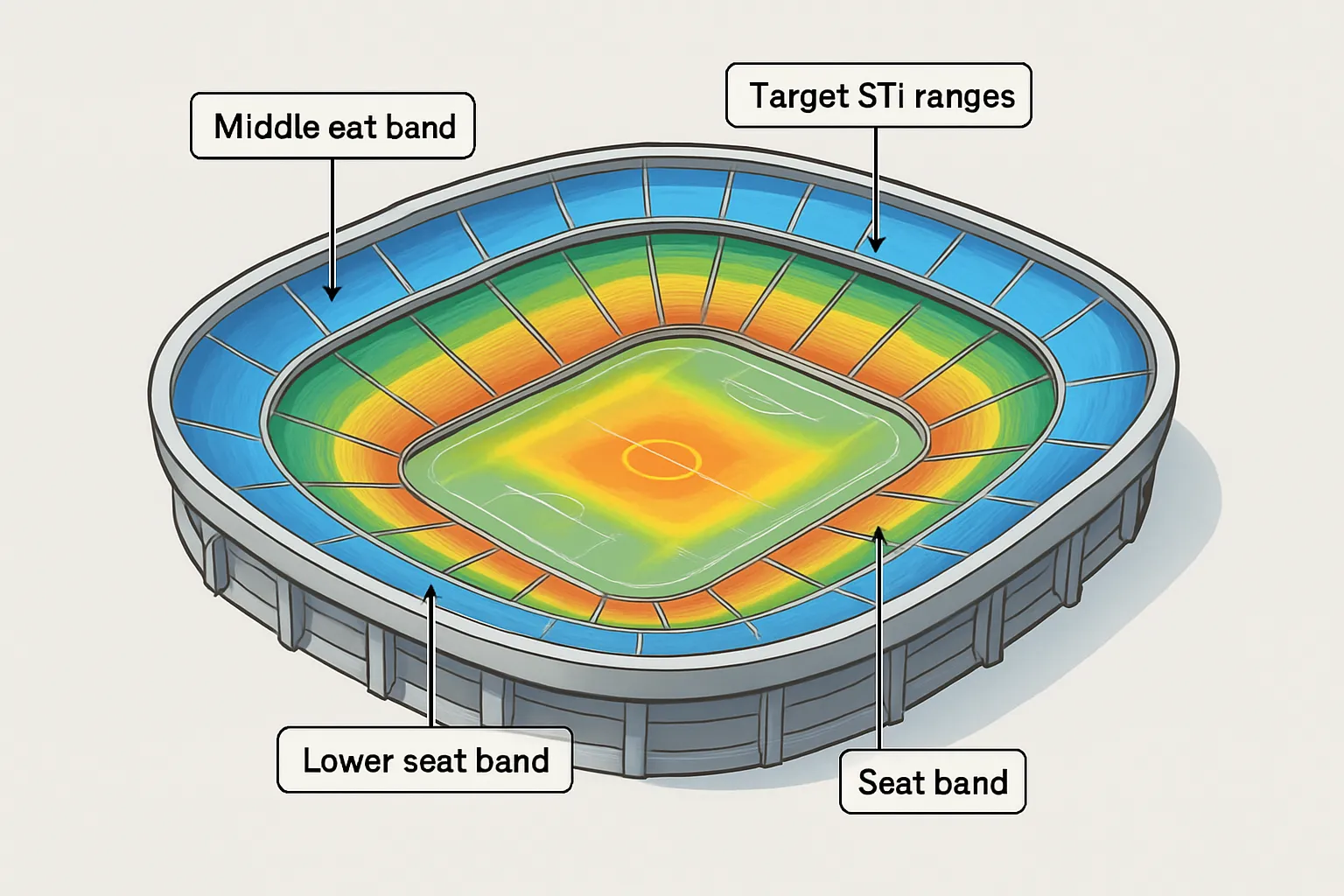
Apply frequency‑dependent absorption/ scattering to major surfaces and include “occupied seat” absorption to approximate game‑day conditions. - Generating SPL, STI, and direct‑to‑reverb maps
Simulate candidate topologies and placements. Compare:- SPL heat maps for even coverage and headroom
- STI maps for intelligibility targets in voice‑critical zones
- Direct‑to‑reverberant and early‑reflection data to control clarity
Use these outputs to make data‑driven choices about loudspeaker models, splay angles, aiming, and zone layout before a single hanger is installed.
Validating the model in the field
- Commissioning measurements
Verify the design using SMAART or similar FFT tools for magnitude/phase, impulse response for time‑of‑flight, STI/STIPA for intelligibility, and polarity checks at every zone. - Tuning approach
- Splay and aiming: confirm predicted angles; adjust to keep energy on seats, not structure
- EQ: apply gentle, broadband corrections and surgical filters only where needed
- Delays: align fills and rings to the dominant source to reduce comb filtering
- Dynamic processing: set limiters/ducking/AGC scenes for voice priority on game day
Key deliverables stakeholders should expect
- Coverage plots: color‑coded seat maps for SPL, STI, and direct‑to‑reverb targets
- Zone definitions: logical areas for bowls, concourses, suites, and field-of-play
- Amplifier/DSP I/O list: channel counts, network topology, and redundancy plan
- Headroom budget: target program levels vs. amp/speaker capability and ambient noise
- Monitoring plan: device health, fault reporting, and logging for compliance and uptime
The result is a stadium sound system design that’s predictable on paper and provably excellent on the field – intelligible, impactful, and ready for real crowds.
Outdoor Stadium Sound Systems: Weatherization, IP Ratings, and Environmental Physics
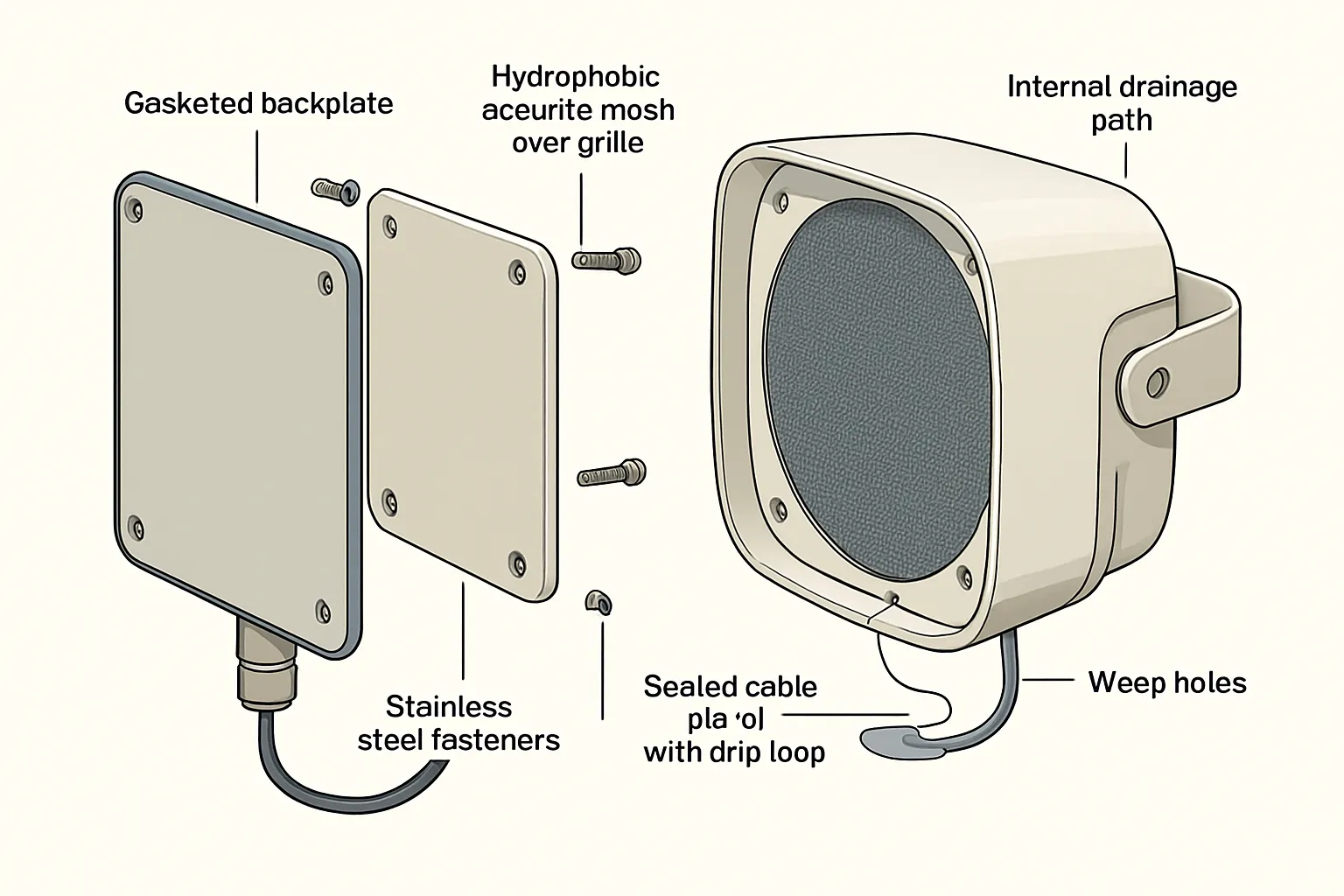
Weather-resistant design that lasts
- IP ratings that matter
- IP55: Protected against limited dust ingress and low‑pressure water jets from any direction.
- IP56: As above, but with protection against strong water jets.
- IP66: Dust‑tight with protection against powerful water jets – ideal for exposed, wind‑driven rain zones.
Select enclosures, amplifiers (in weatherized racks), and junction boxes with appropriate IP ratings for their exact mounting location.
- UV, salt fog, corrosion control
Use marine‑grade stainless steel fasteners (A4/316), powder‑coated aluminum or composite enclosures, and corrosion‑resistant grilles. Hydrophobic membranes behind grilles shed wind‑driven rain without choking HF response. - Connections that survive outdoors
Cable glands with proper strain relief, sealed backshells, dielectric grease on contacts, and drip loops below entry points prevent water ingress. Choose outdoor‑rated connectors and UV‑resistant cabling.
Environmental effects on sound
- Wind, humidity, temperature gradients
Long throws across a bowl are sensitive to shifting meteorological layers. Crosswinds steer HF energy; warm‑over‑cool layers bend sound upward; humidity subtly alters HF absorption and arrival timing. - Designing the compensation
- Delay zones: Break the bowl into coherent rings; keep arrivals tight to the dominant source to preserve STI.
- Auto‑EQ scenes: Weather‑aware presets and modest dynamic EQ adapt to temperature/humidity shifts without overcorrecting.
- Headroom: Extra amplifier/speaker headroom keeps clarity intact when wind or crowd noise spikes.
“The speed of sound increases by ~0.6 m/s per °C rise in air temperature; humidity also increases propagation speed – both shift arrival times and EQ perception over stadium throws.” – Source
Mounting, aiming, and safety outdoors
- Structural and safety
Engineer mounts for ultimate wind and seismic loads, with vibration isolation to protect drivers and structures. Include bonding/grounding, surge suppression, and a coordinated lightning protection plan. - Aiming and sightlines
Keep vertical patterns tight to the audience and off reflective structures and neighborhoods. Integrate enclosures with architecture to respect sightlines and minimize visual impact for community acceptance.
Maintenance plans for reliability
- Seasonal inspection and updates
Create spring/fall checklists for seals, cables, fasteners, grills/meshes, drainage paths, and any corrosion. Coordinate firmware updates for amplifiers/DSP and validate scenes before season openers. - Remote monitoring
SNMP/telemetry for device faults, thermal events, limiter activity, and impedance drift catches problems early and documents compliance.
Outdoor weatherization checklist
| Component/Area | Typical Risk | Recommended Spec/Practice | Inspection Frequency |
|---|---|---|---|
| Loudspeaker enclosures | Wind‑driven rain, dust ingress | IP56–IP66 enclosure, UV‑stable finish, sealed backplate gaskets | Semiannual |
| Grilles and meshes | Corrosion, HF loss from clogging | Marine‑grade stainless, hydrophobic/oleophobic mesh with drainage path | Semiannual |
| Fasteners/mounts | Corrosion, loosening, vibration | A4/316 stainless, locking hardware, threadlocker, vibration isolation | Semiannual |
| Connectors/junctions | Water ingress, UV cracking | IP‑rated connectors, sealed glands, dielectric grease, drip loops | Quarterly |
| Cabling | UV exposure, abrasion | UV‑resistant jacket, proper support/strain relief, no low points trapping water | Semiannual |
| Amplifiers (outdoor racks) | Heat, moisture, corrosion | NEMA/IP‑rated climate‑controlled racks, desiccant, filtered vents | Quarterly |
| DSP/network switches | Condensation, power events | Conformal‑coated boards or protected enclosures, UPS/surge protection | Quarterly |
| Grounding/lightning | Surge damage | Bonded metallic paths, surge suppressors, coordinated LPS with MEP | Annual |
| Drainage paths/weep holes | Blockage leading to pooling | Clear obstructions; verify tilt/weep function | Quarterly |
With the right specifications, smart zoning, and disciplined maintenance, an outdoor stadium sound system will remain clear, compliant, and reliable – season after season.
Commercial Audio Equipment for Arenas: DSP, Amplifiers, Networking, and Power
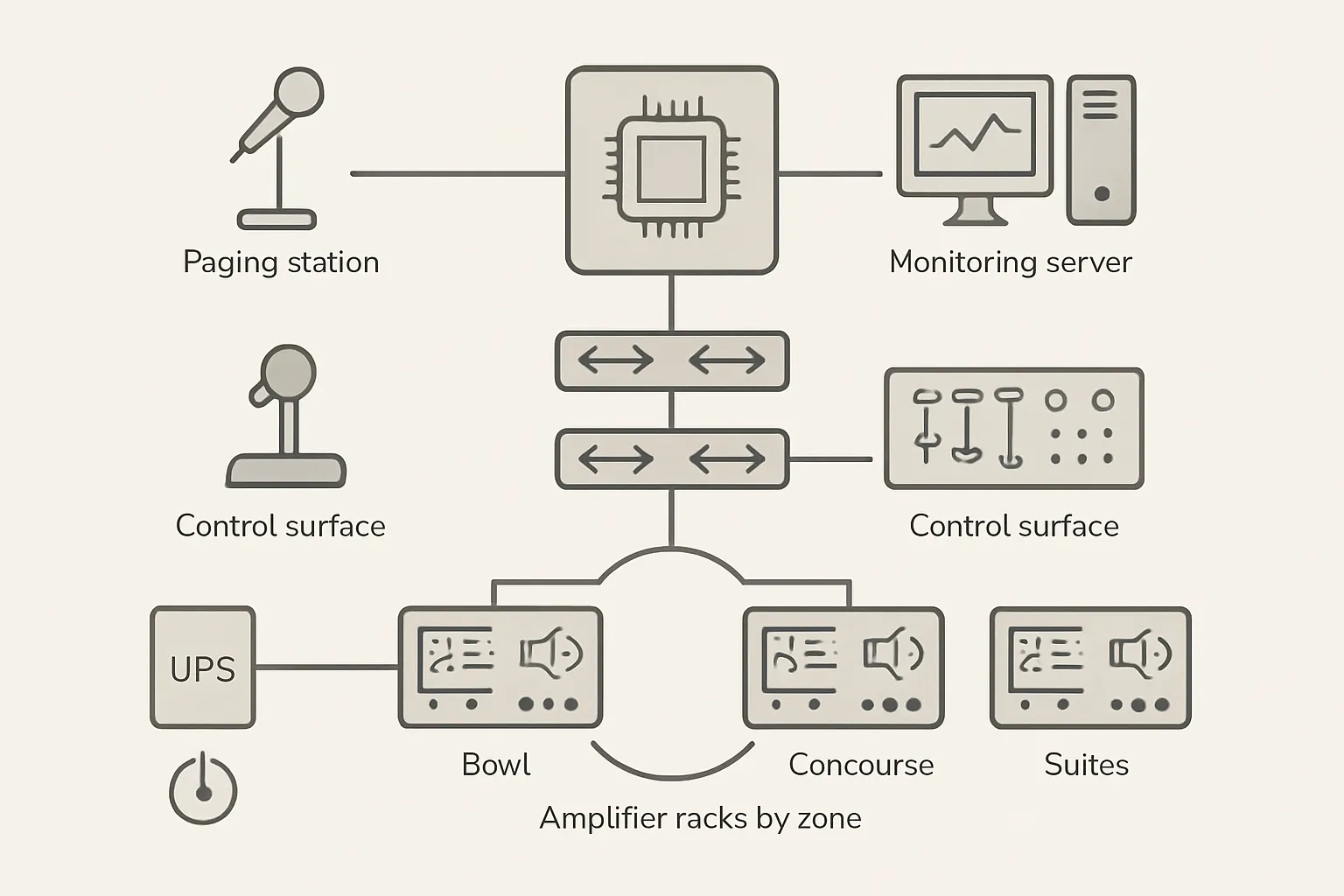
DSP as the control center
- Matrixing by zone
Organize the DSP around logical venue areas: bowl, concourses, suites/clubs, and field-of-play. Route sources (announcer mics, playback, broadcast tie-lines, paging) to zones with clear priority rules. - Loudspeaker management
Employ FIR/IIR EQ for voicing and system linearity, band-limited limiters for driver protection, and loudness management to preserve intelligibility during crowd surges. Use delay matrices to time-align mains, rings, and fills. - Presets and scenes
Create recallable presets for sports, concerts, ceremonies, and emergency modes. Automate source, EQ, delays, and limiter thresholds per event profile; lock critical parameters behind role-based control.
Amplification and headroom
- Power sizing fundamentals
Match amplifier power to loudspeaker sensitivity, coverage distance, and desired SPL, accounting for crest factor, impedance, and cable loss. Target clean headroom so voice can sit +10 to +15 dB over ambient without clipping. - Channels and redundancy
Plan channel counts with future growth. Use N+1 or hot-spare strategies for high-priority zones; distribute loads across frames to avoid single points of failure. Monitor thermal status and load impedance for early fault detection.
Audio networking in large venues
- Protocols and segmentation
Dante, AVB, and Q‑LAN leverage AES67 for interoperability. Use VLANs per program class (PA, paging, control) and enable QoS so clock and audio packets get priority. - Clocking, latency, fiber
Choose a stable PTP grandmaster; keep latency budgets tight for lip-sync and time-of-flight alignment. Use redundant fiber rings and diverse paths between core and amp rooms. - Monitoring and alerting
SNMP-integrated network switches and device agents feed a monitoring server or cloud dashboard. Add GPIO relays for critical alarms to facilities/BMS.
Power, grounding, and surge
- Clean power and continuity
Supply isolated, conditioned power to AV racks with right-sized UPS for graceful shutdowns and short-ride-through events. Use proper bonding/grounding, surge suppression at service entrance and at rack level, and coordinated lightning protection in outdoor venues.
Integration with video and control
- Unified operations
Tie audio presets to show-control and video switcher cues; provide intuitive control surfaces and paging stations with zone selection and priority override. Implement emergency override priorities that duck or mute non-essential sources while guaranteeing intelligible announcements across all zones.
Codes, Safety, and Accessibility: Designing for Compliance
Designing stadium and arena audio isn’t only about great sound – it’s about meeting life-safety and accessibility requirements every day the venue is open. A compliant system prioritizes emergency communication, verifies intelligibility, and ensures everyone – including patrons using assistive listening – receives clear information.
Voice evacuation and emergency paging
- Priority states and ducking
Define a strict priority hierarchy so emergency tones and messages override all other sources across every zone (bowl, concourses, suites, field-of-play). Implement automatic ducking or muting of program audio and paging during emergency states, with latching behavior and lockouts to prevent accidental changes. - Intelligibility verification in occupied areas
Identify acoustically distinguishable spaces (ADS) and determine where intelligibility must be demonstrated. Use STIPA or approved qualitative methods to verify voice messages can be clearly understood at representative listener positions, reflecting operational conditions as closely as practical.
“Voice communication using prerecorded messages and manual voice announcements must be verified as intelligible in accordance with NFPA 72 requirements for acceptance testing; the AHJ determines exact applicability.” – Source
Standards and listings to know
- NFPA 72 (US) and AHJ oversight
Align emergency voice/alarm functions with NFPA 72 (2022 edition) requirements and any local amendments. The authority having jurisdiction (AHJ) directs applicability, acceptance tests, and documentation. - Product compliance and listings
Specify listed equipment suitable for emergency communication use (e.g., UL/ETL listings for speakers, amplifiers, control equipment; where applicable, UL 2572 for mass notification control, UL 864 for fire alarm control). In EU contexts, reference EN 54 series (e.g., EN 54‑16 voice alarm control, EN 54‑24 loudspeakers) for voice alarm systems. - Accessible communication (ADA)
Provide assistive listening systems in assembly areas as required by ADA/IBC. Integrate RF/IR or hearing loop solutions tied to the main PA feed, with required receiver counts, neck loops, and signage. Ensure paging and emergency announcements are present on ALS and follow priority rules.
Practical compliance workflow
- Document acceptance criteria and test plans
Define intelligibility targets (STI/STIPA or approved qualitative measures), paging priorities, evacuation message logic, supervised pathways, and survivability expectations. Include device supervision, fault reporting, and backup power/UPS strategy where required. - Coordinate with AHJ and life-safety contractors
Involve the AHJ early. Align the AV design with fire alarm/mass notification contractors on audio routing, control interfaces, and emergency triggers. Provide shop drawings, I/O schedules, sequence-of-operations, and method-of-procedure (MOP) for testing. - Execute verification and turnover
Perform pre-tests (STIPA, coverage checks), witness tests with the AHJ, and train operations staff. Deliver as-built drawings, configuration backups, inspection schedules, and monitoring dashboards so compliance is sustained over the system’s life.
Commissioning, Tuning, and Game‑Day Operations
Successful stadium sound system launches are won in the details: meticulous commissioning, objective tuning, and clear game‑day procedures. Here’s how we bring commercial audio equipment online with confidence – and keep it performing flawlessly when the crowd roars.
Step‑by‑step commissioning checklist
- Pre‑power inspections
- Verify mounting hardware torque, safety cables, weather seals, drip loops, and enclosure orientation for outdoor stadium sound systems.
- Confirm electrical distribution, phase balance, voltage, UPS sizing, bonding/grounding, and surge protection.
- Label racks, circuits, network ports, I/O, and zones per drawings.
- Network and DSP readiness
- Validate VLANs and QoS rules; confirm clock domains and PTP grandmaster selection.
- Check primary/secondary network links; simulate link fails for redundancy.
- Standardize firmware and sample rates across DSP, amplifiers, and endpoints; load approved configuration and backup.
- Signal path verification
- End‑to‑end pink noise per zone to validate routing, meters, and source/zone priority logic.
- Paging station tests: zone selection, priorities, and ducking.
- Loudspeaker line checks
- Polarity: click/pop or impulse test at every device; correct mis‑wired runs.
- Impedance: sweep per channel to catch pinched cables, water ingress, or driver faults; compare to baseline.
- Cable loss: verify conductor gauge vs. run length; adjust amp tap/sensitivity if required.
- Gain structure and protection
- Calibrate reference levels through mic preamps, DSP buses, outputs, and amplifier inputs.
- Set limiters (per‑band where supported) to protect drivers while preserving headroom.
- Verify target program levels and headroom budget (+10 to +15 dB above ambient for voice).
- Time alignment and delays
- Measure time‑of‑flight with FFT; set base delays for rings and fills to the dominant source.
- Check lip‑sync with video systems where applicable.
- Validate arrival consistency across aisles, upper tiers, and under‑balcony areas.
- Tuning and intelligibility
- Apply broad tonal shaping first; use narrow notches only for specific resonances.
- Verify STI/STIPA at representative listener positions; document pre/post results.
- Confirm sub alignment and LF containment for minimal spill.
- Redundancy and failover
- Exercise N+1 amp spares, load‑sharing, and auto‑failover routing.
- Validate safe‑state behavior on DSP reboot or network loss.
- Confirm alerting: SNMP traps, email/SMS thresholds, GPIO fault relays.
- Acceptance documentation
- As‑built drawings, final DSP files, presets, and version control.
- Measured reports: SPL uniformity, STIPA, delay map, impedance baselines.
- Operator training records, quick‑reference SOPs, and maintenance schedules.
DSP presets and show control
- Scene management
- Sports, concerts, graduations/ceremonies, press events, and emergency modes – each with tailored routing, EQ, delays, and limiter thresholds.
- Weather/seasonal variants (temperature/humidity) for predictable tonality and timing.
- Safe‑state and watchdogs
- Define a default “safe audio” preset that loads on reboot or fault.
- Clock/stream watchdogs trigger automatic input failover (e.g., from network audio to local backup).
- Enforce role‑based permissions and lock critical parameters; enable audit logging for changes.
- Automation hooks
- Integrate with control and video systems for event‑driven cues (intros, timeouts, halftime).
- Priority rules that guarantee emergency override across all zones regardless of active scene.
Real‑world tuning moves
- High‑Q vs. broad shaping
- Use high‑Q surgical filters sparingly to tame discrete modes or horn resonances.
- Prefer gentle, broadband shelves/peaks to refine overall voicing for speech and music.
- Time alignment that holds up
- Align fills to the dominant source to reduce comb filtering; check transitions at section boundaries.
- Re‑verify delay times after seat occupancy or temperature swings.
- Smarter low‑frequency strategy
- Cardioid sub arrays (flown or ground) reduce backwall/roof excitation and neighborhood spill.
- End‑fire or gradient arrays: set precise spacing, delay, and polarity for deep rear/side rejection.
- Adaptive headroom
- Keep limiters transparent during typical program; reserve clean peaks for hype moments.
- Use modest dynamic EQ or ducking keyed to announce mics so speech stays clear without hard level swings.
Staff training and SOPs
- Day‑of‑game quick checks
- Network health (primary/secondary links, PTP status), device online count, amp temps/fans, load impedance trends.
- Confirm correct scene, paging function to representative zones, and a 10‑second test announcement window.
- Spot‑check SPL and clarity in sample sections; log anomalies.
- Escalation and fault response
- Step 1: Invoke safe‑state preset; confirm emergency priority path.
- Step 2: Identify scope (single channel, amp frame, zone, or network segment) via monitoring dashboard.
- Step 3: Switch to hot‑spare amp or reroute DSP outputs; replace suspect cables/connectors if localized.
- Step 4: If network issue, fail to secondary path or local inputs per SOP.
- Notify operations and life‑safety partners per comms tree; document incident with time stamps and corrective actions.
- Post‑event wrap‑up
- Save logs, export health reports, and schedule corrective maintenance.
- Review operator feedback; adjust presets or SOPs to address recurring issues.
With disciplined commissioning, thoughtful tuning, and clear operations playbooks, your sound system design performs at its peak when it matters most – delivering intelligible announcements and impactful experiences every game day. When you’re ready, The Audiovisual Consultant can help design your commissioning plan, train staff, and keep your venue’s audio reliable season after season.
Budgeting, Phasing, and RFP Tips for Stadium Sound System Design
Smart planning saves money, reduces risk, and ensures your stadium sound system delivers intelligible, impactful audio on day one – and for years to come. Here’s how The Audiovisual Consultant recommends budgeting, phasing, and specifying your project to get it right.
Building a realistic budget
Include more than just loudspeakers and amplifiers. A complete, commercial audio budget should account for:
- Core system elements
- Loudspeakers (main arrays/clusters, fills, subs), rigging hardware, safety cabling
- DSP core, networked I/O, control surfaces, paging stations
- Power amplification (with N+1 spare capacity) and assistive listening systems
- Infrastructure and trades
- Structural engineering and rigging steel; lift/crane access and night work premiums
- Electrical distribution, UPS, surge/lighting protection, dedicated circuits
- Networking (fiber backbone, managed switches, VLANs/QoS), conduit, cable trays, pulls
- Equipment rooms/racks: HVAC/ventilation, security, fire-stopping, labeling
- Acoustic and environmental needs
- Weatherization upgrades (IP ratings, stainless hardware, hydrophobic meshes)
- Noise control/containment studies for neighborhoods (if required)
- Acoustic modeling, measurements (SPL/STI), and on-field verification
- Commissioning and services
- Programming, presets, operator training, show control integration
- Acceptance testing, third-party verification (as required by AHJ)
- Documentation: as-builts, O&M manuals, DSP files, test reports
- Lifecycle and soft costs
- Remote monitoring licenses, SLA/service contracts, annual inspections
- Spare parts kit (drivers, amps, connectors), attrition stock
- Freight, taxes, escalation, insurance, permits
- Contingency guidance
- Design contingency: 10–15%
- Construction contingency: 5–10%
- Price escalation/lead-time risk: project-specific
Tip: Budget TCO (power, maintenance hours, firmware upkeep) alongside CapEx so leadership understands lifecycle costs.
Phasing without sacrificing quality
When the budget must stretch across seasons, phase intelligently:
- Prioritize intelligibility-critical paths first
- Press/announcer chain, emergency paging priority/overrides, and primary bowl coverage to meet STI and SPL over ambient targets.
- Build the backbone up front
- Install conduits, cable trays, and fiber rings with spare strands; oversize core switches and DSP frame capacity; leave labeled dark ports for future zones.
- Add rigging steel, safety points, and electrical rough-ins now – even if arrays/fills come later.
- Deploy in coherent zones
- Phase by complete zones (e.g., lower bowl + concourse A) to avoid patchwork coverage and uneven guest experience.
- Use temporary presets to maintain time alignment and priority logic as phases go live.
- Plan alternates and adds
- Bid alternates for flown cardioid subs, distributed fills in upper tiers, enhanced weatherization, and monitoring/SLA levels so you can scale based on budget at award time.
Writing a clear RFP/spec
Performance-based specifications protect outcomes without locking you to a single brand. Include:
- Measurable performance criteria
- Coverage: e.g., ≥95% of audience seats within ±3 to ±6 dB of target broadband SPL.
- Intelligibility: STIPA per IEC 60268‑16 meeting defined thresholds by zone (e.g., bowl “Good” target, concourses “Fair/Good”).
- Voice SPL: design for +10 to +15 dB over documented ambient during typical events.
- Submittals and modeling
- Require pre-award concept modeling and post-award detailed EASE (or equivalent) models with SPL, STI, and direct-to-reverb maps.
- Mandate as-built models/files that reflect final aiming, splay, and EQ/delay data.
- Verification and documentation
- Test plan with grid density, instrumentation, and acceptance tolerances.
- Turnover package: as-builts, DSP/amp configs, presets, network diagrams, I/O schedules, O&M manuals, training materials, and spare parts list.
- Code compliance and safety
- Call out NFPA 72 alignment (where applicable), AHJ coordination, emergency priority/override behavior, supervised pathways (if required), and assistive listening compliance.
- Equipment listings/ratings (UL/ETL, EN 54 where applicable) and outdoor IP/weatherization specs by location.
- Reliability and monitoring
- Define redundancy (N+1 for critical zones), failover behavior, and device/network monitoring (SNMP, syslog, fault relays) with alerting thresholds.
- Qualifications and execution
- Integrator qualifications (relevant certifications, recent stadium/arena references), safety record, bonding/insurance.
- Pre-bid site walk, RFI process, pilot mockup (if complex sightlines), and schedule milestones (submittals, FAT, SAT, commissioning, training, turnover).
- Warranty and service expectations
- Minimum warranty duration, response times, on-site spares, firmware maintenance cadence, and optional SLAs with defined KPIs.
A well-structured RFP and phased plan ensure you get a stadium sound system that hits intelligibility, impact, and compliance targets – without surprises. The Audiovisual Consultant can help scope budgets, draft performance specs, and manage vendor coordination so your project stays on time, on target, and on budget.
Start Designing Smarter
Great venue audio isn’t an accident – it’s a result of disciplined sound system design. The big takeaways:
- Coverage uniformity: Even SPL and voicing across every seat beats raw loudness.
- Intelligibility first: Design to meet STI targets and hold +10 to +15 dB over ambient for voice.
- Environmental resilience: Weatherization, IP ratings, and meteorological planning protect performance in outdoor stadium sound systems.
- Compliance and safety: Align with NFPA 72, assistive listening, and AHJ expectations – and document it all.
Use these metrics to evaluate your current stadium sound system or arena PA. If you’re seeing hotspots, garbled announcements, or reliability gaps, it’s time to rethink the approach.


